























How Can Sales Teams Use AI to Improve Close Rates?
 Justin Zappulla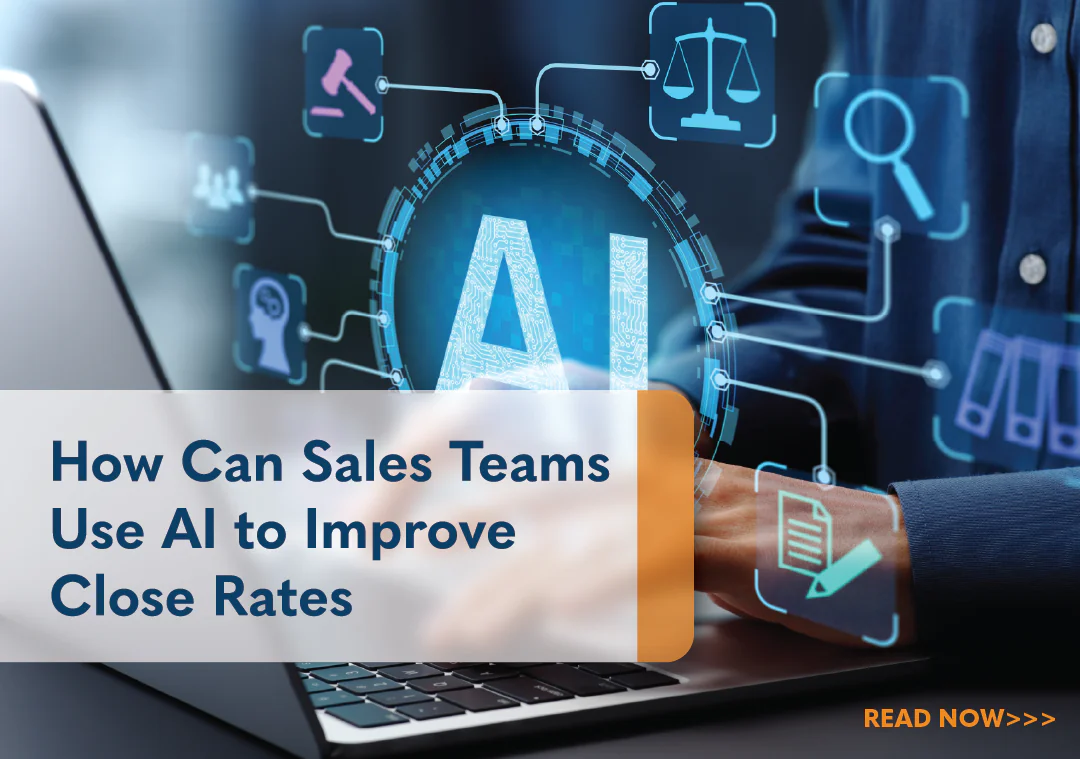
- A Quick Look Into AI Research
- 7 Key Ways Sales Teams Use AI to Improve Close Rates
- Why Data Quality Matters When Using AI in Sales
- How Can AI Help Sales Teams Understand Prospects in the Sales Funnel?
- Top of Funnel: Profiling Target Buyers
- Middle of Funnel: Decoding Intent Signals
- Bottom of Funnel: Analyzing Sentiment and Execution
- How Can a Digital Sales Enablement Solution Support AI Adoption?
- Can AI Sales Roleplay Tools Help Sellers Prepare for Real Conversations?
- Why the Human Side of Selling Still Matters
- A Final Thought
Many sales leaders today are asking the same question: how can sales teams use artificial intelligence (AI) to improve close rates?
Sales teams can improve close rates using AI by leveraging predictive lead scoring to prioritize high-value prospects, automating personalized outreach, and analyzing conversations in real time to guide closing strategies. AI tools also increase efficiency by automating CRM data entry, reducing administrative work, and offering actionable, data-driven coaching for sales reps.
A Quick Look Into AI Research
AI is quickly becoming part of the daily workflow for many sales teams. Companies are experimenting with AI sales tools for prospect research, email drafting, forecasting insights, and customer conversation summaries. The potential benefits are clear. AI can help sellers save time, surface useful information faster, and better understand what is happening inside an account.
Recent research from Salesforce shows how quickly this shift is happening. In its 2026 State of Sales report, 54 percent of sellers said they have already used AI agents in their work, and nearly nine out of ten expect to be using them within the next year. Sellers also expect AI to reduce prospect research time by more than 30 percent and cut email drafting time by a similar margin.
Those savings are important, but saving time alone does not improve sales performance. What matters is how that time is used. From what I am seeing across sales organizations today, the teams that are getting the most value from AI are approaching it thoughtfully. They connect AI tools to their sales process, their training programs, and their daily workflows.
7 Key Ways Sales Teams Use AI to Improve Close Rates
Many leaders start their AI journey by asking what the best AI sales tools are. That question is understandable, but it is usually not the most helpful starting point. A better question is often this: where in the sales process are we losing deals today?
Some teams struggle with identifying strong opportunities early in the pipeline. Others have difficulty understanding buying groups inside large accounts. Some teams spend too much time on research and preparation. AI tools can help address each of these areas, but only when they are connected to a clear sales objective.
For example, AI can help sellers analyze account activity, highlight signals of buyer interest, or identify deals that may be at risk. It can also help sellers prepare for meetings by summarizing past conversations and highlighting key customer concerns.
When leaders begin with the problem instead of the technology, adoption tends to move much faster. The tool becomes useful because it solves a real issue in the sales process.
We’ve compiled a practical list below of seven key ways to use AI to your sales team’s advantage:
- Predictive lead scoring: AI analyzes past customer behavior and engagement to identify which leads are most likely to convert. This strategy allows reps to stop wasting time on low-potential leads and focus their efforts on the most promising opportunities, often increasing their chances of closing a deal.
- Personalized outreach at scale: Generative AI tools automate the creation of tailored emails and outreach sequences. This approach helps make outreach more relevant, timely, and personalized, cutting through the noise, increasing engagement, and sparking more conversations.
- Real-time conversation intelligence: AI can listen to sales calls and meetings to provide instant feedback and suggest rebuttals to common objections. As a result, it acts as a co-pilot for sales reps, guiding them toward effective closing techniques during the conversation, when it matters most.
- Automated administrative tasks: AI assistants can handle tasks like updating CRM records, scheduling follow-ups, and managing other administrative duties. Automating these tasks frees up significant time for sales reps, allowing them to focus on high-value selling activities that can lead to revenue.
- Enhanced sales forecasting: Offer improved accuracy and real-time sales forecasts using AI to analyze historical deal data, pipeline velocity, and seasonality. Sales managers can then identify at-risk deals early and intervene proactively, preventing deals from stalling and improving overall pipeline health.
- Data-driven coaching: AI can identify individual skill gaps by analyzing performance data. Utilizing this strategy allows sales leaders to provide personalized, targeted coaching that can help improve the performance of the entire team.
- Empowering your sales team: The most successful sales organizations are augmenting their top-tier talent with AI-powered insights. Human skills are uniquely valuable, including building rapport, asking strategic questions, using emotional intelligence, and solving complex problems. AI can identify an opportunity or recommend a next step. Still, it takes a skilled sales professional to build the relationship, navigate the political landscape of a deal, and ultimately win the business.
Why Data Quality Matters When Using AI in Sales
One factor that often gets overlooked in conversations about AI is data quality. AI tools depend on the quality of the information they are based on. If CRM records are inconsistent, if deal stages are unclear, or if activity tracking is incomplete, AI systems struggle to produce reliable insights.
This is one reason some organizations feel disappointed after implementing new AI tools. The technology may be capable, but the information behind it is messy. Sales teams that see stronger results usually spend time improving the basics first. They define their opportunity stages clearly, make sure account ownership is accurate, and encourage sellers to keep information current.
This type of work is not glamorous, but it creates the foundation that allows AI tools to generate meaningful insights. Without that foundation, even the best AI sales tools will struggle to deliver value.
How Can AI Help Sales Teams Understand Prospects in the Sales Funnel?
AI can transform how sales teams understand prospects by automating manual data collection and turning unstructured buyer behaviors into actionable intelligence. By injecting context-aware data into every phase of the sales pipeline, AI helps revenue teams predict buyer intent, map target pain points, and personalize outreach at scale. Understanding prospects changes dynamically depending on where the lead resides in your pipeline:
Top of Funnel: Profiling Target Buyers
At the top of the funnel, AI can help eliminate manual web scraping and guesswork from the prospecting process by automating or reducing manual research tasks. By analyzing historical data from an organization’s highest-value clients, AI tools identify lookalike prospects that share similar firmographics, including company size, industry, revenue range, and organizational structure.
Predictive lead scoring then ranks these prospects by their likelihood to convert, enabling reps to direct outreach toward the accounts most worth pursuing. Real-time data enrichment adds another layer of context, pulling in company news, recent hiring patterns, and market signals, so reps arrive at the first discovery call with a multi-dimensional understanding of a prospect’s challenges.
Middle of Funnel: Decoding Intent Signals
Once a prospect enters the pipeline, AI helps sales teams read the implicit digital behaviors that traditional methods miss. Intent signal monitoring tracks activity across web visits, content downloads, and engagement frequency, alerting reps to the precise moment a target account begins showing active buying behavior. This real-time intelligence allows teams to reach prospects when they are in solution-evaluation mode, rather than guessing at timing.
Generative AI outreach tools then synthesize these intent signals into hyper-personalized messages that align directly with a prospect’s current interests.
Bottom of Funnel: Analyzing Sentiment and Execution
At the bottom of the funnel, AI shifts the focus from who a prospect is to how they feel and when they may buy. Conversation intelligence tools apply sentiment analysis to sales calls and email exchanges, surfacing the emotional cues that signal buying readiness or unspoken hesitation. AI also performs buyer behavior forecasting, which uses historical pipeline data to predict when a prospect is likely to reach a purchase decision, helping sales leaders prioritize the right opportunities at the right time.
Additionally, AI can support more effective objection handling by identifying common friction points for specific deal types, so reps can prepare targeted responses before a conversation becomes difficult.
How Can a Digital Sales Enablement Solution Support AI Adoption?
Another challenge many organizations face is tool overload. Sales teams already operate inside multiple systems. CRM platforms, forecasting tools, communication platforms, content libraries, and learning tools all compete for attention. When AI tools exist outside of those environments, sellers may try them briefly and then return to their normal routines.
Organizations that see stronger adoption tend to integrate AI insights directly into existing workflows. Sellers can then see recommendations inside their CRM, conversation summaries appear alongside deal notes, and coaching insights connect to enablement platforms.
This is where digital sales enablement solutions can play an important role. When training, coaching, and performance insights are connected in one place, sellers have a clearer path to apply what they learn. Managers can reinforce the right behaviors and help sellers translate AI insights into stronger customer conversations.
Many organizations are also exploring AI-powered sales reinforcement platforms that reinforce training and guide sellers during real selling situations. The goal is to make AI more useful inside the daily rhythm of selling.
Can AI Sales Roleplay Tools Help Sellers Prepare for Real Conversations?
Another area gaining attention is AI-driven roleplay and conversation practice. Some organizations are beginning to use AI sales roleplay tools to simulate buyer interactions. Sellers can practice responding to objections, asking discovery questions, and navigating complex deal scenarios.
These tools can provide a safe environment where sellers can experiment with different approaches before speaking with real customers. Used well, they help reinforce learning between live customer conversations. AI roleplay tools are most effective when paired with structured sales training programs that help sellers apply new techniques in real customer conversations.
They are not meant to replace coaching from managers or trainers. Instead, they provide another opportunity for sellers to build confidence and refine their approach. For teams that want to strengthen sales skills at scale, this type of technology can be a useful addition.
Why the Human Side of Selling Still Matters
Despite all the excitement around AI, the fundamentals of selling remain the same. Buyers still want to work with people who understand their challenges, and they still value thoughtful questions, clear thinking, and genuine conversations.
What AI can do is remove some of the background work that slows sellers down. It can help gather information faster, summarize conversations, and highlight patterns across deals. That gives sellers more time to focus on what matters most, like conversations, trust, and understanding a customer’s real challenges. The strongest sales teams are using AI to support those interactions, not replace them.
A Final Thought
AI sales tools will continue to evolve. New capabilities appear every year, and the list of available platforms will keep growing. But the organizations seeing the most progress are focusing on how AI supports real selling. They connect it to their sales process, their training efforts, and their daily workflows.
The competitive advantage in the coming years will not come from who owns the most AI tools. It will come from who uses them thoughtfully. Technology can help sellers move faster and see opportunities more clearly, but great selling will always come down to people.
While AI provides the “what,” a proven sales methodology provides the “how.” Janek Performance Group’s sales training programs equip your team with the skills to turn these AI-driven insights into consistent, revenue-generating habits. Contact us to connect with our team today.


- A Quick Look Into AI Research
- 7 Key Ways Sales Teams Use AI to Improve Close Rates
- Why Data Quality Matters When Using AI in Sales
- How Can AI Help Sales Teams Understand Prospects in the Sales Funnel?
- Top of Funnel: Profiling Target Buyers
- Middle of Funnel: Decoding Intent Signals
- Bottom of Funnel: Analyzing Sentiment and Execution
- How Can a Digital Sales Enablement Solution Support AI Adoption?
- Can AI Sales Roleplay Tools Help Sellers Prepare for Real Conversations?
- Why the Human Side of Selling Still Matters
- A Final Thought

- Account Planning (11)
- AI Sales Coaching (20)
- AI Sales Enablement (21)
- AI Sales Technology (22)
- Awards (61)
- Client Testimonial (40)
- Opportunity Management (14)
- Personal Branding (19)
- Podcast (12)
- Research (69)
- Sales Career Development (86)
- Sales Coaching (169)
- Sales Consulting (135)
- Sales Culture (161)
- Sales Enablement (364)
- Sales Execution (23)
- Sales Leadership (114)
- Sales Management (245)
- Sales Negotiation (17)
- Sales Prospecting (120)
- Sales Role-Playing (26)
- Sales Training (248)
- Selling Strategies (256)
- Soft Skills (68)
- Talent Management (93)
- Trusted Advisor (28)
- Uncategorized (1)
- Virtual Selling (43)
- Webinar (13)