




























How Do You Build a Sales Culture in Your Organization?
 Nick Kane
- What Is a High-Performing Sales Culture?
- The Importance of Sales Culture
- How a Positive Culture Impacts Revenue and Retention
- 4 Pillars of a Winning Sales Culture
- 1. Actionable Core Values
- 2. Data-Driven Sales Leadership
- 3. Coaching and Recognition
- 4. Aligned Teams
- AI in Modern Sales Culture
- Why Culture Matters in Sales Training and AI Coaching
- Use AI to Create Fairer Quotas and Territories
- How to Build a Strong Sales Culture
- 1. Take Stock
- 2. Define Your Vision and Secure Buy-In
- 3. Launch a Pilot Program to Measure Wins
- 4. Roll Out and Iterate
- Build a Winning Culture With Janek Performance Group
Many executives eagerly integrate AI and automation tech into their sales programs, expecting an immediate transformation. However, these investments’ full potential often remains untapped due to cultural mismatches.
Beyond being an HR initiative, culture is a significant advantage that influences daily decisions and creates the foundation for adaptability, satisfying customer experiences, effective coaching and sustained revenue growth.
This guide provides a practical roadmap for building a resilient, high-performing sales culture that integrates modern tools, boosts team morale and delivers measurable revenue growth.
What Is a High-Performing Sales Culture?
Think of sales culture as the operating system for performance. It affects how smoothly your team communicates, manages customer interactions and resolves challenges.
These environments are not accidental — leaders intentionally design and consistently reinforce them.
The Importance of Sales Culture
Sales culture extends beyond hitting quarterly numbers. It encompasses the shared values, beliefs and behaviors that dictate team operations. Today, culture is a business imperative for several reasons.
- Evolved buyer expectations: Customers now expect consultative, personalized experiences rather than transactional selling.
- Remote and hybrid work environments: Distributed teams require deliberate culture-building to maintain alignment and connection.
- Burnout spreads without support: High-pressure sales environments can lead to disengagement if leadership fails to provide adequate recognition and resources.
Research confirms that recognition and effective leadership influence employee engagement and burnout prevention. These elements are essential to a robust sales culture.
How a Positive Culture Impacts Revenue and Retention
A cohesive sales culture influences business outcomes. Sales leaders who actively cultivate culture consistently achieve measurable improvements in revenue performance and team retention.
- Faster onboarding: New hires assimilate faster with structured processes and accountability coaching.
- Protected institutional knowledge: Retaining experienced sales teams safeguards customer relationships and invaluable industry expertise.
- Improved forecast accuracy: Cultures that prioritize communication and accountability generate accurate pipeline predictions.
Given the substantial cost of sales representative turnover, a positive culture can reduce attrition rates and improve organizational investment in training and development.
4 Pillars of a Winning Sales Culture
Building a high-performing sales culture rests on four interconnected pillars. These are not isolated initiatives — instead, they function as a cohesive system, consistently reinforced by leadership behavior and effective organizational processes.
1. Actionable Core Values
Core values require operational definitions that translate into observable behaviors, influencing culture in meaningful ways.
- Define values in action: Describe what each value looks like in practice during customer conversations and team interactions.
- Integrate throughout talent life cycle: Incorporate values into hiring criteria, onboarding programs, performance reviews and promotion decisions.
- Recognize publicly: Celebrate employees who exemplify core values in their daily work.
2. Data-Driven Sales Leadership
Modern sales leadership transitions from intuition-driven management to data-informed decision-making. Metrics provide transparency and remove bias from performance evaluations.
- Balance metric types: Monitor both lagging metrics like revenue and leading indicators, including pipeline activity and coaching participation.
- Improve visibility: Use dashboards to increase transparency across teams and regions.
- Support ongoing coaching: Use data for regular coaching conversations, not solely annual reviews.
This evaluation approach enables sales leaders to identify skill gaps early. Tracking sales KPIs supports informed decisions regarding resource allocation and training needs.
3. Coaching and Recognition
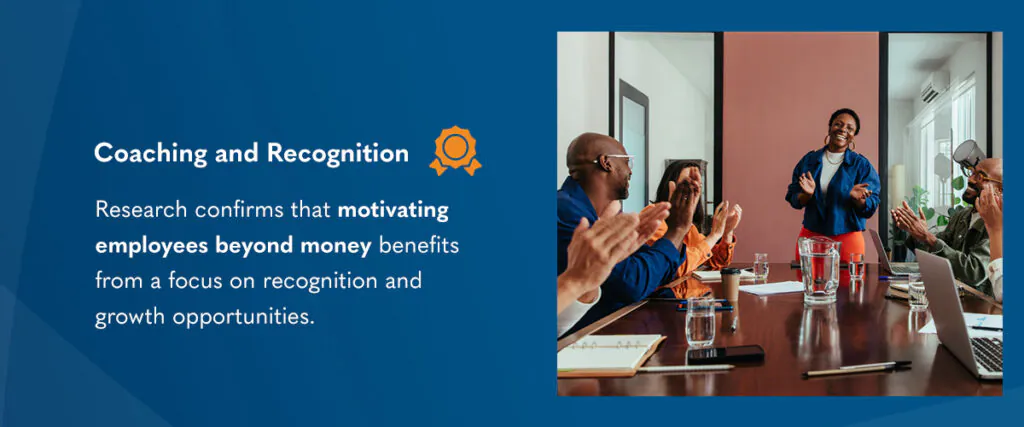
High-performing sales cultures evolve beyond intense competition toward collaborative team dynamics. Consistent coaching and meaningful recognition build an ideal environment.
- Create peer learning opportunities: Encourage top performers to share successful approaches with colleagues.
- Train managers in coaching: Provide them with essential coaching skills for effective feedback and development support.
- Recognize behaviors: Celebrate the consistent demonstration of desired values and behaviors, extending beyond closed deals.
Research confirms that motivating employees beyond money benefits from a focus on recognition and growth opportunities.
4. Aligned Teams
Breaking down departmental silos strengthens sales culture and improves business results. Organizations achieve better lead quality and more consistent customer messaging when sales, marketing and customer success teams collaborate toward shared goals.
- Establish shared KPIs: Define common objectives that reduce interdepartmental friction.
- Apply customer feedback: Use customer success insights to boost lead qualification and messaging effectiveness.
- Ensure consistency: Maintain smooth alignment from initial contact through renewal and expansion.
- Enable faster adaptation: Cross-functional collaboration helps organizations to rapidly respond to market shifts and evolving AI-driven go-to-market strategies.
AI in Modern Sales Culture
AI tech can transform sales organizations when supported by a stable cultural foundation. Teams that value learning, experimentation and continuous improvement tend to adopt AI more thoroughly because they’ve already mastered other ways to adapt and grow.
Ultimately, AI should enhance human selling, not replace the relationship‑building that drives customer loyalty.
Why Culture Matters in Sales Training and AI Coaching
Generative AI’s potential relies on establishing traditions that value continuous experimentation and growth.
- Identify gaps faster: AI-powered sales coaching technology reveals skill development needs sooner than traditional review methods.
- Build trust through transparency: Sales teams will be more willing to embrace AI-driven feedback when their leaders transparently communicate data usage and privacy protocols.
- Support continuous learning: Organizations that position AI as a development tool, rather than a surveillance mechanism, achieve higher adoption rates.
Use AI to Create Fairer Quotas and Territories
Uneven sales territories and unrealistic quotas can undermine morale and erode trust. AI and predictive analytics use market data to establish equitable territory assignments and achievable performance targets.
- Balance territory assignments: Use data analysis to design territories that the entire team perceives as fair.
- Set achievable targets: Predictive analytics enables leaders to set quotas grounded in market realities, moving beyond arbitrary goals.
- Improve retention: Equitable performance expectations can mitigate frustration and boost engagement.
- Allocate resources effectively: Data-driven territory planning enables leaders to devote assets to the areas where they’ll do the most good.
How to Build a Strong Sales Culture
Culture transformation requires a systematic approach. Sales leaders who consistently follow a structured framework achieve more sustainable results, avoiding the pitfalls of unprepared, company-wide transformations.
1. Take Stock
Start with an honest baseline assessment. Use anonymous surveys, focus groups and structured one-on-one interviews with sales teams to gather candid feedback. Review turnover data and employee engagement metrics to identify patterns.
Identify disconnects between stated values and actual behaviors. This assessment highlights the areas where culture-building efforts will have maximum impact.
2. Define Your Vision and Secure Buy-In
Synthesize assessment findings into a transparent vision for your desired culture. Translate cultural goals into measurable behaviors and KPIs. Articulate the reasoning behind changes.
Securing buy-in from senior leadership and team managers is essential for successful implementation. Sales leadership guidelines for managers can guide this process.
3. Launch a Pilot Program to Measure Wins
Prioritize controlled testing over immediate company-wide rollouts. Begin with a single team or region as a pilot program to test new processes, coaching schedules or tools in a controlled environment.
Establish baseline metrics before launching the pilot, then track progress against those benchmarks. Share early wins internally to build momentum and demonstrate value.
4. Roll Out and Iterate
Once the pilot demonstrates success, implement organization-wide changes. Recognize that culture-building is an ongoing process, not a one-time project.
Incorporate reinforcement mechanisms into onboarding programs and ongoing training. Schedule regular culture reviews alongside performance reviews. Revisit and adjust based on feedback and evolving business needs.
Build a Winning Culture With Janek Performance Group

Building a high-performing sales culture requires leadership commitment and consistent reinforcement. This systematic approach shapes behaviors and creates environments where sales teams excel.
Janek helps organizations overhaul their sales cultures through AI-powered sales coaching technology. Our tailored solutions deliver measurable, lasting results aligned with your business goals.
Whether you’re launching a new culture-building initiative or refining an existing one, we are ready to help you forge a resilient, adaptable sales organization.
Reach out to our team today to get started.
Post updated:


- What Is a High-Performing Sales Culture?
- The Importance of Sales Culture
- How a Positive Culture Impacts Revenue and Retention
- 4 Pillars of a Winning Sales Culture
- 1. Actionable Core Values
- 2. Data-Driven Sales Leadership
- 3. Coaching and Recognition
- 4. Aligned Teams
- AI in Modern Sales Culture
- Why Culture Matters in Sales Training and AI Coaching
- Use AI to Create Fairer Quotas and Territories
- How to Build a Strong Sales Culture
- 1. Take Stock
- 2. Define Your Vision and Secure Buy-In
- 3. Launch a Pilot Program to Measure Wins
- 4. Roll Out and Iterate
- Build a Winning Culture With Janek Performance Group

- Account Planning (11)
- AI Sales Coaching (21)
- AI Sales Enablement (22)
- AI Sales Technology (23)
- Awards (62)
- Client Testimonial (40)
- Opportunity Management (14)
- Personal Branding (20)
- Podcast (12)
- Research (69)
- Sales Career Development (86)
- Sales Coaching (170)
- Sales Consulting (136)
- Sales Culture (161)
- Sales Enablement (364)
- Sales Execution (24)
- Sales Leadership (114)
- Sales Management (245)
- Sales Negotiation (17)
- Sales Prospecting (122)
- Sales Role-Playing (26)
- Sales Training (250)
- Selling Strategies (257)
- Soft Skills (68)
- Talent Management (93)
- Trusted Advisor (28)
- Uncategorized (1)
- Virtual Selling (43)
- Webinar (13)